|
I am a Master of Science in Machine Learning student at Carnegie Mellon University, where I work on robot learning, reinforcement learning, vision-language-action models, and LLM agents. I am especially interested in sample-efficient adaptation and robust post-training under distribution shift. At CMU, I work with Prof. Aviral Kumar and Prof. Max Simchowitz on continual learning for LLMs and data-efficient adaptation of generalist robot policies, including deployment on real robot hardware. Before graduate school, I was an Applied Scientist in Microsoft's Speech and Language Group, where I built and shipped large-scale speech-to-text systems. Outside of work, I enjoy playing the keyboard and guitar, table tennis, badminton, rock music, and horror films. CV / Email / Github / LinkedIn / Google Scholar |
|
|
|
My research focuses on post-training embodied foundation models so they can adapt from limited data and generalize under distribution shift. I am particularly interested in vision-language-action models, imitation and reinforcement learning, real-robot validation, sim-to-real transfer, and continual learning for LLM agents. |
|
|
|
May 2026 – Present Carnegie Mellon University |
Prof. Aviral Kumar and Prof. Max Simchowitz Leading research on continual learning for LLMs that mitigates catastrophic forgetting. Designing and benchmarking multi-agent scaffolds on open-source LLMs, and experimenting with auxiliary objectives to improve the sample efficiency of reinforcement-learning fine-tuning. |
|
Oct. 2025 – May 2026 Carnegie Mellon University |
Prof. Max Simchowitz and Prof. Aviral Kumar Proposed a sample-efficient online reinforcement-learning framework that adapts generalist VLA policies from one demonstration. Deployed the full RL loop on real-robot hardware under distribution shift beyond simulation, and characterized the minimal-data regime through ablations of factors that drive out-of-distribution generalization. |
|
Oct. – Dec. 2025 Carnegie Mellon University |
Oral presentation at the HCAIR Workshop, ICLR 2026 Proposed COACH, a framework in which one LLM generates worked examples that condition a second LLM for code solutions. Jointly trained both models with GRPO and execution-based rewards, improving pass@1 by 32% over vanilla GRPO-based RLVR on MBPP with 40% better sample efficiency. Paper |
|
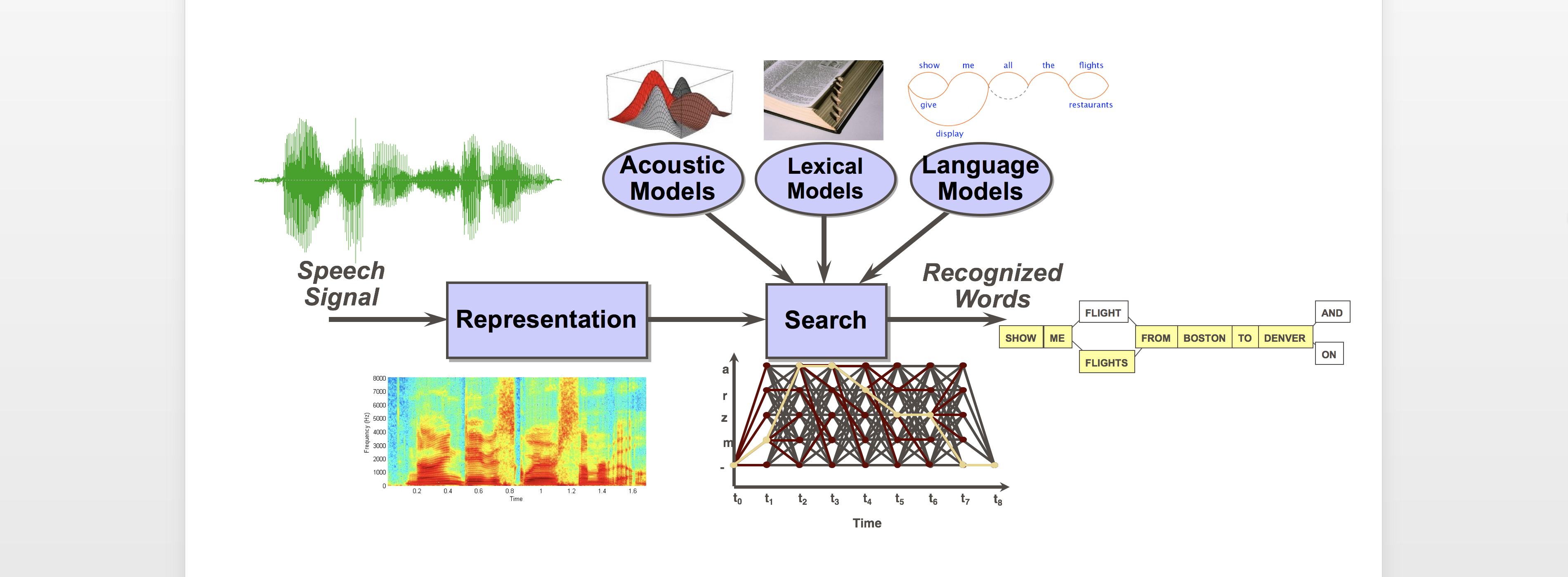
Microsoft, Hyderabad | May 2022 – September 2024 Shipped four transformer speech-to-text models, scaling distributed training with DeepSpeed to more than 100 million parameters. Built pipelines over 100,000 hours of speech and a neural language-model rescoring system, reducing word error rate by 10% and accelerating training by 5×. |
|
|
| ICLR 2026 / RSS 2026 |
First author | ICLR 2026 (submitted), RL4VLA at RSS 2026 |
| ICLR 2026 |
First author | HCAIR Workshop, oral presentation | Paper |
| NAACL 2021 |
First author | NLP4IF | Paper |
| Pattern Recognition 2021 |
Paper |
|
|
| May – June 2026 |
Vision-Language-Action Models, Inference, Flow Matching Built an inference-only intervention that remaps the VLM prefix KV-cache of a frozen π0.5 flow-matching policy. Found that success collapses below 12 of 18 VLM layers, while a single denoising step nearly matches ten on LIBERO-10. |
| Jan. – Apr. 2026 |
Test-Time Adaptation, Reinforcement Learning, Planning Proposed test-time adaptation for VLAs by refining actions online with GradQ ascent on a warm-started Q-function. Improved task success by 18% over behavior-cloning baselines on the hardest long-horizon LIBERO-Long tasks. Report |
| Carnegie Mellon University |
Deep Reinforcement Learning, LLMs, Computer Vision Implemented core deep and offline RL algorithms, model-based learning, and imitation learning from scratch; derived foundational computer-vision methods; and built a Llama-3 model with RoPE, RMSNorm, grouped-query attention, SwiGLU, training, and sampling. Code |
|
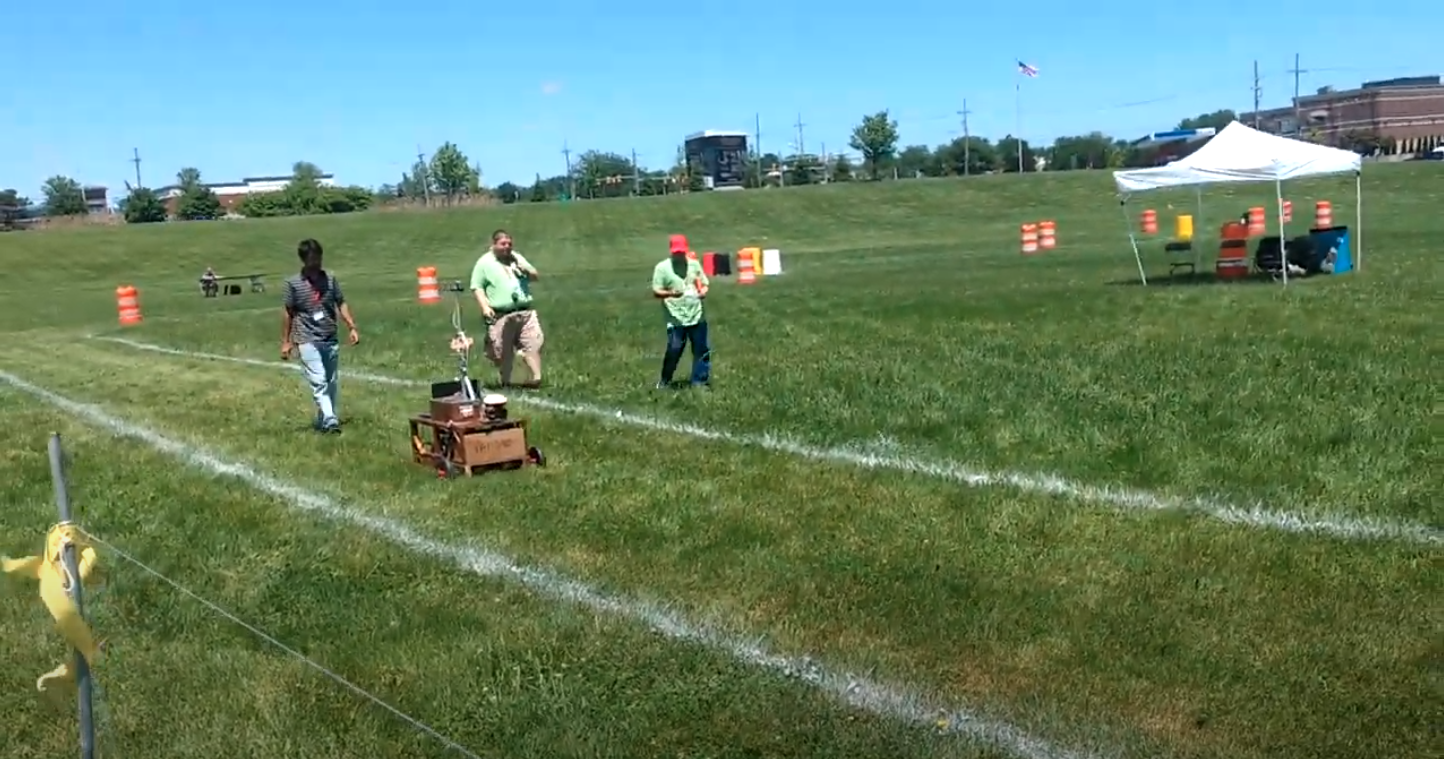
IIT Kharagpur | May 2018 – May 2020 Built a MobileNet-SSD traffic-sign detector running at more than 50 FPS with an integrated tracking pipeline. Designed perception for the Eklavya 6.0 and 7.0 robots, which finished as runners-up at IGVC 2018 and 2019. Site / Code / Report / Video |
|
Languages and Libraries: Python, JAX, C++, PyTorch, TensorFlow, Hugging Face, NumPy, ROS, CUDA, FAISS Tools and Infrastructure: Git, Docker, Ray, HPC, Linux, Weights & Biases, Distributed and Mixed-Precision Training (DeepSpeed), MuJoCo, Isaac Robot Post-Training and ML: Embodied Foundation Models, VLAs, Fine-Tuning and Domain Adaptation, Imitation Learning, RL/RLHF/RLVR, Distillation, Synthetic Data, Curriculum Learning, Flow-Matching Policies, Real-Robot Validation, Sim-to-Real, Robustness and Controllability, Evaluation and Failure Analysis |
Template adopted from Jon Barron. |